
Testing by Material
Floor Tile & Black Mastic Asbestos Testing
Floor tile asbestos testing determines whether older resilient flooring, and the adhesive beneath it, contain asbestos. Tile and mastic are separate materials and are often sampled separately because they can produce different results.
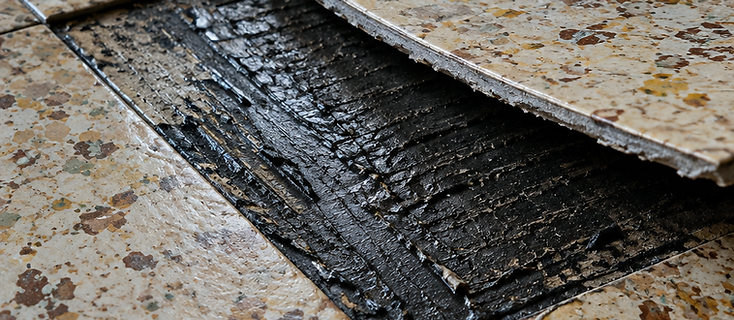
Which Flooring Materials Are Commonly Tested
- Vinyl and asphalt floor tiles in kitchens, baths, basements, and hallways
- Sheet vinyl and cushioned vinyl flooring
- Black mastic and other trowel-applied flooring adhesives
- Underlayment and the paper backing on some sheet goods
- Old carpet mastic and tack strip residue in some installations
Black Mastic Adhesive and Asbestos: What Property Owners Should Know
Black mastic is the dark, trowel-applied adhesive used to bond vinyl and asphalt tiles to a subfloor. It was used in enormous quantities in mid-century kitchens, basements, and commercial spaces, and some of those products were manufactured with asbestos.
Color does not establish asbestos content. Not every black adhesive contains asbestos, and some lighter-colored adhesives do. The only way to know is a laboratory analysis of a sample taken from the adhesive itself.
Mastic is also easy to overlook. Many owners test the tile, receive a negative result, and assume the whole assembly is clear, when the adhesive underneath is a different product with a different answer. When flooring is removed, both the tile and the adhesive are disturbed, so both deserve consideration.
Scraping, sanding, and grinding are the activities that turn a flooring removal into a fiber-release concern. Mechanical removal with a grinder or floor sander on a suspect adhesive is a particularly poor combination, which is why professional assessment before demolition is worth the time.
| Material | Typical location | Why it is tested separately |
|---|---|---|
| Vinyl or asphalt tile | Kitchens, baths, basements | Manufactured with asbestos in some product lines |
| Black mastic | Beneath tile, bonded to subfloor | Adhesive composition differs from the tile |
| Sheet flooring backing | Kitchens, halls, utility rooms | Backing and felt layers can differ from the wear layer |
How Flooring Sampling Works
A sample of tile and a separate sample of the adhesive are collected, ideally including the layer that will be removed. Samples are sealed and labeled by location, and the laboratory reports each submitted material separately. If multiple floors or installations are involved, each distinct material is sampled.
Removal Options After Testing
Intact flooring that will stay in place generally does not require special handling. Where flooring must come up and asbestos is present, options include removal by a qualified abatement contractor or, in some situations, encapsulation with a new floor installed over the existing assembly. The right approach depends on condition, height, moisture, and what the finished floor needs to do.
Planning a Flooring Replacement
Test before you buy the new flooring. Results can change the removal method, the schedule, and the budget, and a contractor who knows what is under the old floor can plan accordingly instead of discovering it halfway through the job.
Answers
Frequently Asked Questions
Clear answers about floor tile & black mastic asbestos testing and what to expect from the testing process.
Quote Request
Request Your Flooring Testing Quote
Share the property address city, the material you are concerned about, and your timeline. Requests are reviewed during business hours and referred to an independent testing professional where coverage is available.
Request an Asbestos Testing Quote
Tell us about your property and what you need tested.
Next Step
Questions about asbestos in your property?
Call to discuss the material you are concerned about, or send a quote request and we will follow up during business hours.