
Helpful Guide
Asbestos Test Kits vs Professional Testing: What's the Difference?
A home test kit gives you a container and a laboratory submission, while professional testing adds trained sampling, documented chain of custody, and interpretation of the results. Kits can produce valid laboratory data, but the sampling step and the documentation are where the two approaches differ most.
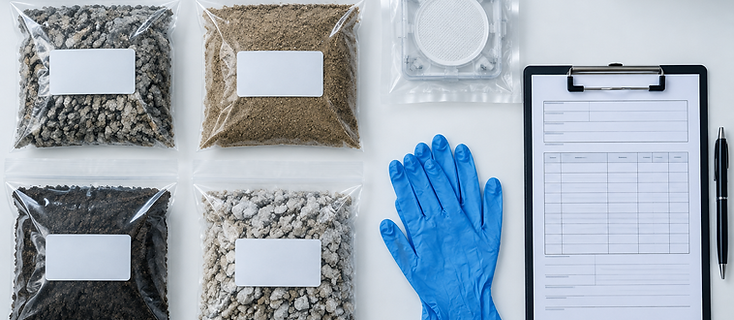
What Consumer Test Kits Include
Most mail-in kits include sample bags or containers, a form, and instructions for collecting a small piece of material and sending it to a laboratory. The laboratory analysis itself is usually a standard bulk method, and the returned report states whether asbestos was detected in the material you submitted.
What the kit does not include is judgment about where to sample, how many samples are needed, or how to handle the material safely while collecting it.
Where DIY Sampling Gets Difficult
- Choosing the right layer when a material has several, such as tile over mastic
- Avoiding cross-contamination between samples and tools
- Keeping friable materials such as pipe wrap or vermiculite intact while sampling
- Deciding how many samples represent an entire room or building
- Maintaining a documented chain of custody for later use
Potential Exposure Risks
Sampling is a small disturbance by definition. With a firmly bonded material like a floor tile, that disturbance is minor. With a crumbling pipe wrap or loose-fill insulation, the same action can release fibers that settle in the area afterward. Professional sampling includes methods and equipment chosen for the material, which matters most when the material is friable.
Documentation and Reporting
A laboratory report tied to an unidentified sample has limited use outside your own home. Contractors, abatement firms, buyers, and lenders generally look for reports that identify the material, its location, the collection date, and the chain of custody. That documentation is built during sampling, not afterward.
How the Two Approaches Compare
| Factor | Consumer test kit | Professional testing |
|---|---|---|
| Sampling | Collected by the property owner, following kit instructions | Collected by a trained professional with material-specific technique |
| Safety | Owner manages disturbance and dust | Collection method chosen for the material's condition |
| Laboratory analysis | Standard bulk analysis of the submitted sample | Method selected to match the project's reporting needs |
| Documentation | Basic result for the sample submitted | Location-based report with chain of custody |
| Suitability | Single, easily accessible, firmly bonded material | Renovation, commercial buildings, friable materials, or documentation requirements |
Which Approach Fits Your Project
If you are curious about one firmly bonded material and no work is planned, a kit may be a reasonable option and its laboratory result is real data. If you are renovating, managing a rental, buying a property, or working in a commercial building, professional sampling and documentation are usually the practical choice, because the project needs a result that others can rely on and act upon.
Answers
Frequently Asked Questions
Clear answers about asbestos test kits vs professional testing: what's the difference and what to expect from the testing process.
Quote Request
Request Professional Testing
Share the property address city, the material you are concerned about, and your timeline. Requests are reviewed during business hours and referred to an independent testing professional where coverage is available.
Request an Asbestos Testing Quote
Tell us about your property and what you need tested.
Next Step
Questions about asbestos in your property?
Call to discuss the material you are concerned about, or send a quote request and we will follow up during business hours.